Search for a psychedelic therapy retreat and the results answer a question about destinations. The question underneath it is narrower: which of these is legal where I live, who is in the room while I am dosed, and what happens if the session goes badly.
Those three answers split the results into two products that share a word.
| Psilocybin retreat | Ketamine programme | |
|---|---|---|
| Legal basis | A local exemption or a state licence: Dutch sclerotia, unscheduled in Jamaica, licensed centres in Oregon and Colorado | A licensed medicine, prescribed off-label under supervision in most countries |
| Who is present during the session | A facilitator, most often with a group in the room | A clinician, with blood pressure checked throughout |
| Predictability | A dose already swallowed runs its own course | An infusion can be slowed or stopped mid-session |
What is legally available, and where
Psilocybin is legal in specific places; ketamine is legal as a medicine in most places, and restricted instead by who may prescribe it.
Psilocybin: the Netherlands, Jamaica, Oregon and Colorado
The Dutch line is botanical, not medical. Psilocybin mushrooms went onto List II of the Opium Act on 1 December 2008; sclerotia, the underground mass of the same organism, were left off and are sold to adults in smartshops. Jamaica left psilocybin out of its Dangerous Drugs Act, so intake standards are set by the operator.
| Oregon | Colorado | |
|---|---|---|
| The law | Measure 109, passed November 2020; licensing opened January 2023 (ORS 475A) | Proposition 122, passed 2022 |
| Licensed centres | 31 service centres on 3 March 2026 | 34 healing centres by February 2026 |
| Federal status | prohibited | prohibited |
Oregon rule also requires a preparation session with a licensed facilitator before dosing, which is not a medical assessment (ORS 475A).
Ketamine: outpatient almost everywhere in the US, medical access inside the EU
Ketamine has been a licensed anaesthetic in the US since 1970, and prescribing it off-label for depression is lawful in every state, which is why several hundred infusion clinics exist. What differs between them is not the legal basis but who assesses you and what happens between sessions.
Australia and Canada sit between the maps. Australian psychiatrists have prescribed psilocybin and MDMA as Authorised Prescribers since 1 July 2023, and Canada reaches psilocybin through individual requests to the Special Access Programme. Ketamine in both is an ordinary prescription.
In the EU, ketamine is authorised as an anaesthetic and its psychiatric use is off-label, which leaves the decision with the prescriber. Whether a health system pays for psychiatric use is settled by each country. Malta regulates ketamine as a controlled drug for medical use, which is why a supervised residential week runs there without a referral.
Ketamine and psilocybin on the points that decide the choice
The two are usually compared on how profound the experience is. For someone choosing where to spend a week, the useful comparison is duller.
| Psilocybin retreat | Ketamine programme | |
|---|---|---|
| Session length | Four to six hours | About forty minutes of dosing, plus observation |
| Stopping mid-session | Not available once the dose is taken | An infusion can be slowed or stopped |
| Evidence base | Phase 2 and phase 3 trials in depression, no approved product | Approved product in treatment-resistant depression since 2019, infusion literature since Berman and colleagues, Biological Psychiatry, 2000 |
| Typical price | Low to mid four figures for three to seven days | High four to five figures for a medically supervised programme |
The stopping row is the one people feel: a fixed oral dose commits you to the whole arc, while an infusion is a tap. The evidence row runs against the marketing, because the ketamine literature is older and an approved product exists, and psilocybin is still in trials.
Both facts sit inside the same limit. The ketamine evidence base was built in treatment-resistant depression, meaning depression that has not responded to two antidepressants taken at an adequate dose for long enough to judge. That describes where the research was done, not who may be treated: outside a national health system the judgement is made clinically, at assessment. Psilocybin trials carry their own limit, since participants can usually tell whether they got the drug or the placebo (Muthukumaraswamy, Forsyth and Lumley, Expert Review of Clinical Pharmacology, 2021). Both limits belong at an assessment, and neither is something to rule yourself out on.
Who is in the room during a session: a doctor, a facilitator, a group
A facilitator is trained in preparing people for the experience, sitting with them through it, and helping them make sense of it afterwards. In Oregon that training is licensed and the scope written into state rule; in the Netherlands and Jamaica it is set by the operator, so quality ranges from excellent to unverifiable. A facilitator’s scope, where a rule writes it down at all, covers preparation, sitting with the session and integration, not assessing your heart, reviewing your medication list or intervening medically (ORS 475A).
A clinician can slow an infusion, treat a rise in blood pressure, and stop a session that is going wrong. A facilitator can reassure, ground and stay with someone for the hours that remain. The published safety guidelines for supervised psychedelic sessions put the weight on screening beforehand and on a trained sitter staying present throughout. Those guidelines do not set out what happens when the event on the day is a medical one.
In a group, attention is divided at the moment one person needs it most, and the others are inside their own session. That is a trade people make, and it should be a choice they were told about, not a surprise on the day.
Four questions to put to any operator in writing
- Who takes your medical and psychiatric history, and what are their credentials and registration number
- Who is physically present during dosing, and how many other guests are dosed at the same time
- Is blood pressure measured, by whom, and at what points
- What is the plan if a session goes badly, and who in the room is qualified to carry it out
Keep the replies. Compared together they tell you more than any brochure, and an operator who answers all four plainly has already told you how the day is staffed.
What a session is like, and what happens afterwards
At a psilocybin retreat, dosing takes the day: swallowed in the morning, peaking for two to three hours, fading across the afternoon, with music, eye shades and a facilitator sitting with the group.
A ketamine session is closer to a medical procedure: blood pressure and pulse checked, dose set by body weight, infusion about forty minutes with a clinician present, observation until vitals are stable.
Outcomes are decided outside the dosing day. Preparation and structured work afterwards separate treatment from a run of appointments: a retreat week ends at the airport, while the programme weeks carry on past the residential part.
The 72-hour window, and what to do with it over the next three weeks
Ketamine acts on the glutamate system, the chemical messaging system between nerve cells, and sets off activity that builds new connection points in mood-regulating areas (Zanos and Gould, Molecular Psychiatry, 2018). In animal work those connections appear across the first 24 to 72 hours, and in one imaging study the rate rose later still, at 72 to 132 hours (Phoumthipphavong, eNeuro, 2016). The window is described in rodents and only partly measured in people; how much of the effect depends on it is unknown, and selling it as settled goes past the evidence.
Flying home the next morning spends the window on an airport. Our programme is built around it:
- On the island. The doctor decides how many sessions you have, and on which days, at an assessment when you arrive. Between sessions you work on what came up with the therapist one to one and in group integration with the other guests.
- The last day. A closing session and your integration plan in writing.
- Three weeks at home. Three online integration sessions with the same team turn what was seen into changes at home; what comes next is agreed with the doctor.
For us the therapy work sits in the days right after each session.
Risks, side effects, and what the assessment weighs
Psilocybin’s profile is mostly psychological and mostly acute: nausea early on, raised blood pressure and heart rate, anxiety or fear during the session, and the difficulty that comes with being committed to several hours (Studerus and colleagues, Journal of Psychopharmacology, 2011). The serious concerns are destabilisation in people at risk of psychosis or with bipolar disorder (Johnson, Richards and Griffiths, 2008), and the group format itself, which offers less individual attention at the moment it is most needed. Prolonged distress after a session is documented (Evans and colleagues, PLOS ONE, 2023), and frequency is reported only where centres are licensed to report it (ORS 475A). Ask an operator what they have seen and what they did about it.
Ketamine’s profile is mostly physiological and better characterised: the drug has been licensed as an anaesthetic since 1970, and its side effects in depression are well described.
During the session. Dissociation, a sense of detachment from the body or surroundings, is part of the effect and not an accident. It is also the part people find hardest to picture in advance. Common alongside it: dizziness, nausea, blurred or double vision, sleepiness, headache, unsteadiness, and a temporary rise in blood pressure and heart rate. The strongest effects pass within about an hour, and the rest usually settle within two. That is why time under observation after dosing is standard.
The rest of that day. Tiredness, mild disorientation and emotional rawness are common. Driving is out until the next day, after a full night’s sleep. Big decisions are better left alone.
With repeated use. Bladder damage is the most serious known consequence of long-term ketamine exposure: urgency, pain on passing water, a bladder that holds less, and in severe cases injury that does not reverse. It is documented mainly in heavy frequent recreational use, at doses and frequencies far above supervised treatment. This is why urinary symptoms are asked about at every review, and why a course has a defined end rather than running indefinitely.
Dependence and craving are recognised risks. Ketamine is a controlled drug with established misuse potential, which is why supervised dosing, a course with a defined end, and limits on take-home supply exist.
Liver enzyme changes turn up occasionally with repeated exposure, and call for monitoring rather than alarm.
Questions about long-term effects on memory and thinking from repeated therapeutic use remain open. The studies that exist do not run long enough to answer that, and a service claiming otherwise is guessing.
What keeps the risk manageable. Screening that turns people away, medical supervision during dosing, blood pressure checks, a course with a defined end instead of indefinite use, and review of bladder and mood symptoms between sessions.
Checked for medical accuracy by Dr Christopher Gauci, MD MRCS(Ed) EDAIC on 1 October 2026. The check covers this section. Everything else on the page is written by our editorial team and verified against primary sources.
Medically reviewed by Dr. [name], MD, [date] — this section.
Both need an assessment before the first dose, and that is where the two products differ most: one side is running a medical assessment, the other an intake form. A medical assessment covers your history, the medication you take, heart health and what you have already tried, and it is done by a clinician. Ask any operator what they check and who checks it, then compare the answer to the intake form you were sent. Where an assessment finds something a psychedelic programme should not treat, the useful outcome is being told so early, by someone qualified to say it, and being told before any money is committed.
What the programme costs and what the sum covers
A three to seven day psilocybin retreat in the Netherlands, Jamaica or Oregon is priced as a package, and it usually buys accommodation, meals, group preparation, one or two dosing days with a facilitator, and a group integration call afterwards. It does not usually buy a psychiatric assessment: Oregon requires a preparation session with a licensed facilitator before dosing, which is a different thing (ORS 475A), and in the Netherlands and Jamaica the intake is whatever the operator decides to run.
A medically supervised programme prices differently, because clinician time is most of the cost rather than the stay, and it is quoted as a course rather than per session.
Local availability moves the total more than the arithmetic does. In the US, outpatient infusion clinics are widespread and priced per session, insurance cover is patchy, and a residential format with a psychiatrist attached is hard to find. In the UK and Ireland the route is usually a private clinic, also per session, and outside the health service. In the EU, ketamine is prescribed off-label under the prescriber’s judgement, which is what makes a supervised residential week possible without a referral.
Ours is one sum for the whole programme, quoted in writing on the introductory call that comes first, before you are asked to pay anything. It covers three weeks of online preparation, the week in Malta with the treatment and the medical supervision, accommodation, meals and activities, and three weeks of online integration, laid out from the first preparation call to the last integration session. The flight is not included.
What a week in Malta adds when ketamine is available near home
Ketamine can be prescribed almost anywhere in the US, and for many people an outpatient course near home is the sensible answer. A clinic visit is an appointment, after which someone drives you home to the same week you came from. Where that week has something to lean on, the local route is cheaper, repeatable and close to your own therapist.
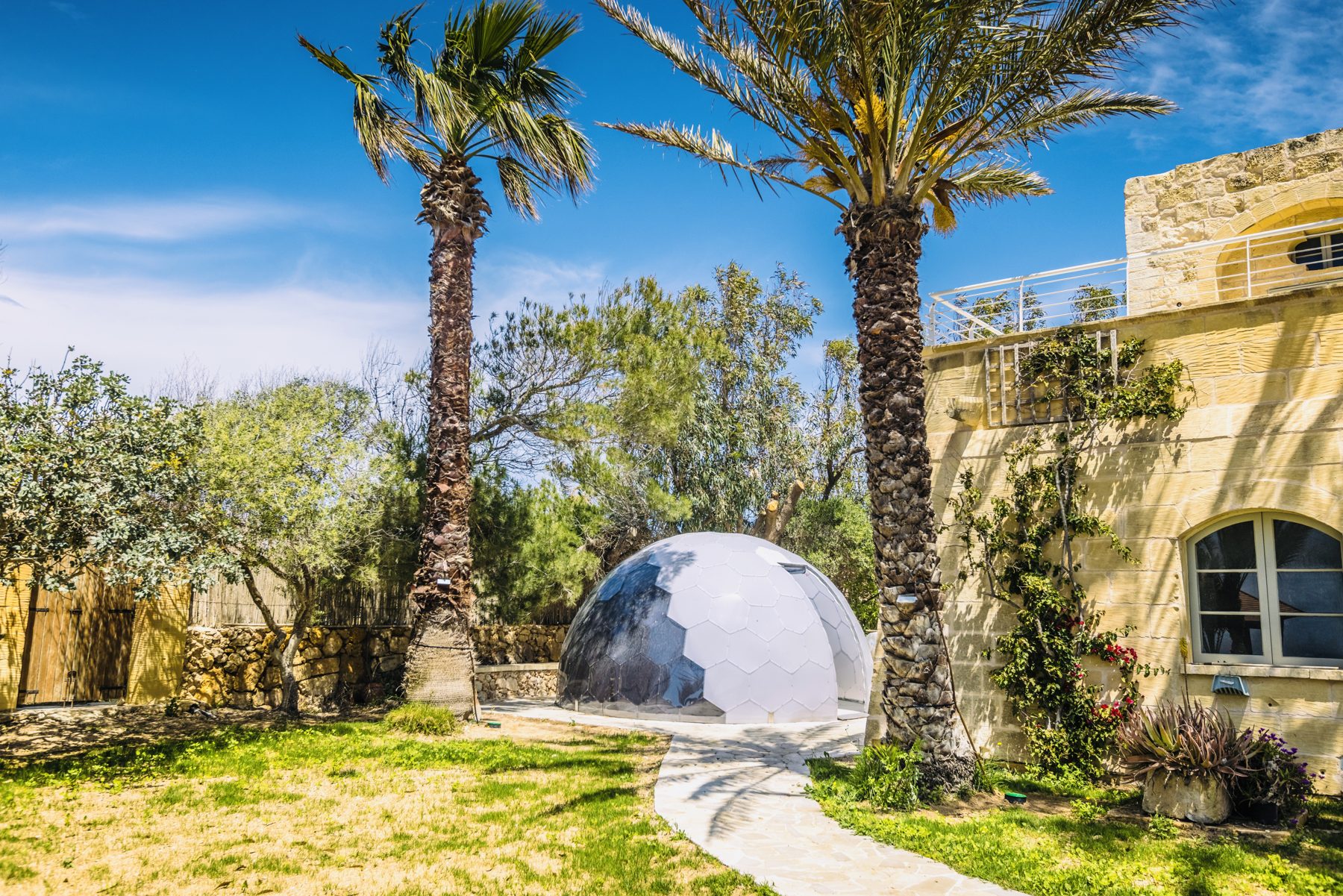
The residential format answers a different situation. It supplies the week itself: distance from the work, home and relationships the pattern lives in, a maximum of four guests with a room each, and a session day kept free of other plans. Each session is individual, with a doctor and a nurse beside you throughout, and between sessions there is one-to-one therapy and integration with the other guests, but no group ceremony. Dr. Peter Muscat, a psychiatrist, and Dr. Christopher Gauci, an anaesthetist, both registered with the Medical Council of Malta, assess you before the programme and stay with you all week. HIVE BIO Malta LTD (C 94710) is a retreat centre with a ketamine-assisted psychotherapy service, not a hospital, and the difference matters for anyone who needs acute psychiatric care instead.
That changes what the money buys. Preparation, sessions, therapy and integration come from one team at one price, where an outpatient route usually buys them separately, from different people, and often leaves the therapy out. You leave with an integration plan in writing and three weeks of online integration with the same team.
That leaves one decision: whether the constraint is access to the drug, which an outpatient clinic solves, or the weeks of structure around it, which it does not. The two doctors read your history and decide suitability before you pay anything, and a no comes with what would have to change. Bring what you have tried and what you are taking now, and book the introductory call, where the price is explained.
Next stepSee how the programme is structured, phase by phase
Common questions
How much does a psychedelic retreat cost?
It depends on what sits inside the week. Ours is one sum for the whole course, and what it buys is clinician time: two doctors who assess you first, a doctor and a nurse in the room at every session, and three weeks of integration afterwards. The figure is quoted in writing on the introductory call. See what each week contains and book the call.
Where in the US is psychedelic therapy legal?
For psilocybin, Oregon and Colorado, both under state law while federal prohibition stands: Oregon service centres opened in 2023 under Measure 109, Colorado healing centres under Proposition 122. Ketamine is different, being a licensed medicine that can be prescribed off-label in every state, which is why a supervised programme is reachable without waiting on legislation. Malta runs it residentially, without a referral letter.
Are there psychedelic retreats?
Yes, and they are legal in a limited set of places: the Netherlands, Jamaica, and licensed service centres in Oregon and Colorado for psilocybin; medically supervised ketamine programmes in jurisdictions where it can be prescribed, Malta among them. What separates them is who assesses you beforehand and who is in the room during dosing, and you can see both answers for ours before you book anything.
What happens at a psychedelic retreat?
Preparation sessions, a dosing day, and integration afterwards. At a psilocybin retreat the dose is swallowed in the morning, effects run four to six hours with a facilitator present, most often in a group. A medically supervised ketamine programme replaces group dosing with individual sessions and a clinician watching vital signs, and the session can be slowed or stopped. The programme weeks around it are set out in order.
Find out whether the programme fits you
Tell us what you are dealing with and what you have already tried. Whether it suits you is decided by two doctors at the medical assessment, before you are asked to pay anything.
No payment and no booking at this step.
Two different products are sold as a psychedelic retreat. A psilocybin retreat can be booked in four places, for three separate reasons: Dutch smartshops sell sclerotia because the 2008 Opium Act ban covered mushrooms and left them off the list, psilocybin was left out of Jamaica’s schedules, and Oregon and Colorado license service centres under state law while federal prohibition stands. Medical access runs on a separate track: Australian psychiatrists prescribe psilocybin as Authorised Prescribers, Canada grants it on individual request, and ketamine is a licensed medicine, licensed for anaesthesia and prescribed for depression outside that licence, which is what off-label means, under supervision across the US, Canada, Australia and most of Europe. A psilocybin session runs four to six hours on a dose already swallowed; a ketamine infusion runs about forty minutes through a line a clinician controls throughout. What separates them is who decides you are suitable, and who is still working with you three weeks after the dose.