
Weekly sessions have a rhythm to them: you open something, the hour ends, you close it back up and go to work. A compressed week is sold to people for whom that closing-up is what stops the work from ever going deep enough to move.
When an intensive works better than weekly sessions
Weekly therapy asks you to reopen the same material every week for months, and a measurable share of people stop before the course is finished (Imel and colleagues, Journal of Consulting and Clinical Psychology, 2013). A compressed schedule removes most of that runway.
Ehlers and colleagues (American Journal of Psychiatry, 2014) tested cognitive therapy for post-traumatic stress disorder delivered over about seven days against the same therapy spread across three months, alongside supportive therapy and a waiting list. The intensive version produced similar outcomes to the standard one, with symptoms falling faster and dropout no higher. Foa and colleagues (JAMA, 2018) ran massed prolonged exposure, where you go back over the memory in a planned way with a therapist, ten sessions in two weeks, against the same treatment spaced over eight weeks in military personnel, and the compressed version held its ground.
Both trials studied structured trauma-focused therapy delivered intensively. Neither studied a week abroad with yoga, breathwork and a group circle. When a listing cites the research on intensives, the schedule is the part that was tested, and the setting came along with it.
A compressed format tends to fit when weekly sessions keep being derailed by life, when the same episode has been circled for years without moving, when the travel and the week away from home that a residential format asks for are available to you, and when someone is lined up to continue the work afterwards.
Formats of trauma retreats, and what is inside the week
The word retreat covers products that have little in common beyond the accommodation.
| Format | What the week contains | Who assesses you | Where it sits on price |
|---|---|---|---|
| Body-based and nature-based | Yoga, breathwork, somatic exercises, group circles, hikes, 5-10 days | Usually an intake form | The cheapest of the three |
| Trauma-focused therapy intensive | Daily individual sessions with a therapist, run to a structured protocol | A therapist, before booking | In the middle |
| Clinical with medical support | Psychiatric assessment, supervised medication-assisted sessions, structured follow-up | A psychiatrist, before booking | The dearest, and the only one with a doctor in it |
Body-based and nature-based weeks
Body-based work has a rationale behind it. Breathwork, movement and somatic work, which go through the body instead of through talking, aim at the nervous system state that talking on its own tends to leave untouched. What carries these approaches as standalone treatment is that rationale. Read as rest with structure around it, a week like this earns its place.
Therapy intensives and clinical programmes with medical support
A therapy intensive runs a structured protocol daily, with a therapist who screens you first. A clinical programme adds what a therapy-only week cannot: a psychiatrist who assesses you before anything is booked, sessions under medical supervision, and structured weeks with the same team after you fly home. Which of the two answers your situation is what a medical assessment settles, and you can send that request yourself, without a referral letter.
Ketamine-assisted therapy for trauma and PTSD
Ketamine-assisted sessions are used in trauma work for a specific job: to make the memory workable long enough for the therapy around it to land. That is a narrower promise than the marketing usually makes, and it is the one the research supports.
The trials bear that out. Feder and colleagues (JAMA Psychiatry, 2014) gave a single intravenous infusion to people with chronic post-traumatic stress disorder, against midazolam rather than saline, which is the harder comparison because midazolam also sedates, and symptoms fell further in the ketamine arm at 24 hours. The same group repeated it with six infusions over two weeks (American Journal of Psychiatry, 2021) and saw a higher response rate, holding for a median of around four weeks in those who responded. Results vary by population, which is why the decision is made for each person, with a psychiatrist who has read your history rather than from a page like this one.
What the research is consistent about is that structured trauma-focused therapy carries the result (Ehlers and colleagues, 2014; Foa and colleagues, 2018), and that the sessions work with it rather than instead of it. That therapy can sit inside the programme’s own weeks, agreed individually at assessment. A benefit measured at around four weeks in responders is precisely the argument for a programme that keeps working with you after the week, and that is what ours is built as. Whether it fits your case is what the medical screening with our doctors is for.
When an intensive week is the right moment
The first group is a question of timing. If you are still inside the situation, living with the person, in the court case, in the job where it happened, an intensive week can open material that the following week offers nowhere to put. Working with trauma at the wrong moment can destabilise, and the guideline behind the UK route (NICE guideline NG116, 2018) leaves that judgement with a clinician who knows your history, not with a booking page. The answer in that case is usually later, with stabilisation first, and a programme that says so is doing its job.
The medical side is settled the same way: before anything is booked, doctors look at your health, the medication you take and what you have already tried, and plan around it.
Put the same question to any programme you are weighing up, ours included, before anything is booked: what happens if the assessment finds something a week cannot treat.
What happens after an intensive, and why it decides the outcome
An intensive opens material and lowers defences. The weeks that follow decide whether that turns into change, when the new state meets the old routine.
What follow-up looks like when it is real
Named sessions on named dates, rather than an open invitation to get in touch. The same clinical team throughout, so you are not briefing a new person halfway through. A plan for the point at which the effect fades, written before you need it. Three weeks of it built into the price, not sold as an add-on afterwards.
People coming back from medication-assisted sessions put the fade in plainer words: the window closed, it wore off, the same symptoms came back. What decides whether that happens is who is still working with you in week three, and whether reaching them takes a message or a chase. Ours is three structured online sessions with the same therapist who was in the room, and an integration plan in writing before you fly home, and the rest of what people ask before booking is answered here.
Our own arrangement is three weeks of online integration after the residential week, with the same therapist you worked with during it. NICE guideline NG116 (2018) treats trauma-focused work as a planned course with review built into it, and those weeks sit inside the protocol for that reason.
What it costs and where to travel
Ours is one sum for the whole programme, covering the preparation weeks, the residential week with the treatment and the medical supervision, the accommodation, the food and the activities, and three weeks of integration. The flight is the one thing outside it. We quote the figure on the introductory call, in writing, before you are asked to pay anything. What the sum buys that a cheaper week does not is clinical staff time: assessment before booking, a doctor and a nurse with you during sessions, scheduled contact afterwards.
Distance is the second half of that sum. Malta is about four hours’ flying time from Britain, against roughly twelve to the Southeast Asian retreats that fill the same search results, and a long-haul flight days after intensive trauma work is a cost that does not appear on any price list. From the airport we arrange the transfer, and the house is about ninety minutes away door to door.
Trauma-focused psychological therapy exists closer to home in most countries, and where you can get it without a long wait it is worth having; an intensive week adds to that route rather than replacing it. What is harder to find anywhere is the combination: a psychiatrist who assesses you first, treatment under medical supervision, and structured weeks afterwards with the same people. Malta sits inside the EU, our programme there runs under the supervision of doctors on the Maltese medical register, and you can apply without a referral letter, which is why the programme is based in Malta.
How our programme works, and how to ask for an assessment
Hive is a retreat centre with a ketamine-assisted therapy service, run by doctors registered with the Medical Council of Malta, whose register is public and worth checking for any programme you consider, ours included. The legal entity is HIVE BIO Malta LTD, company number C 94710.
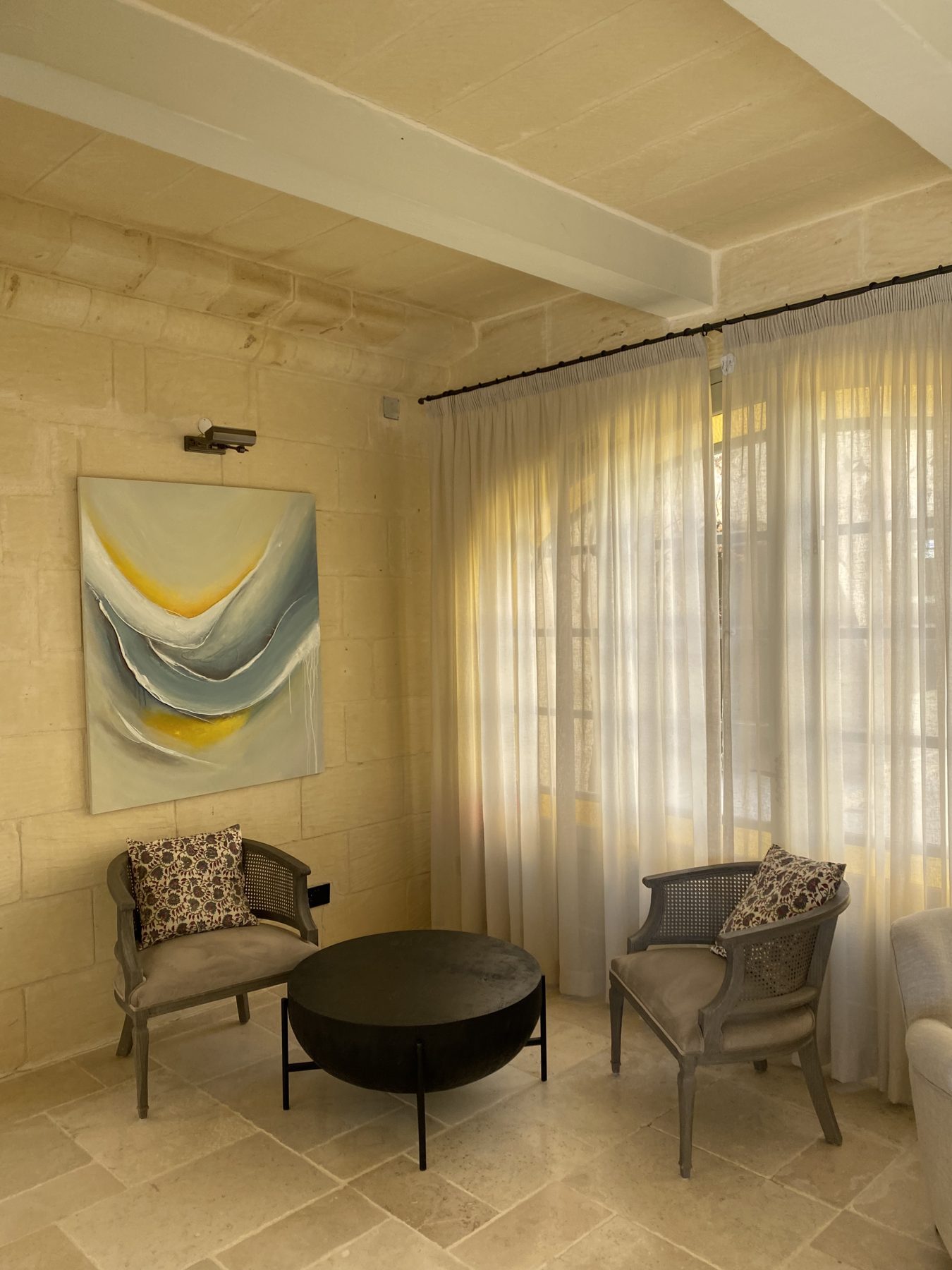
The programme runs for seven weeks in three phases: three weeks of preparation by video, one week at the house in Malta, and three weeks of online integration once you are home. Four guests stay at a time, each in a single room. On arrival a doctor assesses you before anything else is planned, and how many ketamine sessions you have, and on which days, is decided at that assessment. Between sessions you work one to one with a therapist and in integration sessions with the other guests. Trauma-focused therapy can form part of those weeks, decided for each person at the assessment. The week itself is described in order here.
What you gain here is who stays with you. On an outpatient route the sessions, the therapy and the follow-up are usually bought separately from different people, and after a session you go back to the same job and household. Here the same anaesthetist, psychiatrist and therapist are with you for the whole week, the day after a session is kept free so what came up can settle, and the three weeks afterwards are with the people who were in the room.
Whether the programme goes ahead is decided by two of our doctors, a psychiatrist and an anaesthetist, after a medical assessment and before you pay anything, against the timing groups and clinical criteria above. Where the answer is not now, it comes with what would have to change first.
To start, apply without a doctor’s letter: a short call with our team covers the programme and the cost, and the medical assessment follows before any date is held.
Next stepSee how the programme is structured, phase by phase
Common questions
What is the hardest trauma to heal from?
The pattern matters more than the single event: repeated trauma over a long period, starting in childhood, involving someone the person depended on. ICD-11 recognises this as complex post-traumatic stress disorder, with the core symptoms plus lasting difficulties in emotional regulation, self-image and relationships. It responds to treatment, over a course that the expert guidelines set longer than for single-incident trauma (Cloitre and colleagues, Journal of Traumatic Stress, 2011). How long yours should be is a question for the assessment, and you can raise it before anything is booked.
How long does trauma treatment take?
Structured trauma-focused therapy is normally measured in months of weekly sessions, and the intensive trials compressed that into about seven days (Ehlers and colleagues, 2014) or two weeks (Foa and colleagues, 2018) without losing ground. Where medication-assisted sessions are added, the benefit measured in the PTSD trials lasted a median of around four weeks in responders, which is why follow-up is part of the course. In ours it is three weeks with the same team, and the practical questions about those weeks are answered here.
Do I need a referral?
No. You can put your own history forward and a clinician reads it before anything is booked. What matters more than a referral letter is whether a qualified person assesses you before taking your money, and here that assessment comes first by design. Send your history and find out where you stand.
Find out whether the programme fits you
Tell us what you are dealing with and what you have already tried. Whether it suits you is decided by two doctors at the medical assessment, before you are asked to pay anything.
No payment and no booking at this step.
A trauma intensive compresses months of weekly therapy into consecutive days, and the schedule is the part with trial support behind it. Trauma-focused cognitive therapy delivered over about seven days matched the same therapy spread across three months, with symptoms falling faster and dropout no higher (Ehlers and colleagues, American Journal of Psychiatry, 2014). Those trials tested the timetable, not the setting, the location or the group circle. Medication-assisted sessions sit alongside structured trauma-focused therapy, not in place of it, and that therapy can sit inside a programme’s own weeks, agreed individually at assessment. Where the situation is still going on, and in a small number of psychiatric states, the answer is usually later, with stabilisation first; which states those are is set out above in the section on who this format is not for, and an assessment before payment is what settles it. Programmes differ in who assesses you before you book and who is still working with you three weeks after you fly home.