When did you last take a proper week off work? Did you come back to yourself, or did the flatness return within a few days?
If a real week off has not been tried, try that first and keep the money. If breaks have stopped working, the amount of rest you are getting is probably not the problem, and the retreat you pick has to be able to find out what is.
Tiredness, burnout or depression: who draws the line
Three states produce the same sentence: I am exhausted, and time off does not fix it. Telling them apart takes an examination.
The sources disagree about what burnout is. The World Health Organization puts it in ICD-11 as an occupational phenomenon, code QD85, not a condition. Sweden treats exhaustion disorder as a diagnosis in its own right. A 2021 meta-analysis of 14 samples found exhaustion tracks depressive symptoms more closely than cynicism (Bianchi and colleagues). The assessment settles what you are carrying, and it belongs before you pay.
What the psychiatrist checks at the assessment
No single test settles burnout. A psychiatrist uses a clinical interview, a validated questionnaire, and the ruling out of what imitates exhaustion.
The questionnaire. The Maslach Burnout Inventory has been the standard since 1981. It returns a profile across exhaustion, cynicism and efficacy; the verdict comes from the interview.
The ruling out. A depressive episode, anxiety disorder, thyroid disease, anaemia, sleep apnoea and drug side effects produce the same fatigue. A clinician arrives at burnout by excluding them, from your history.
At Hive it is 45 minutes with two doctors, Dr Peter Muscat, consultant psychiatrist, and Dr Christopher Gauci, anaesthetist, and you can put yourself forward without a letter from a doctor. It ends one of three ways. Overwork with nothing underneath it: the tiredness is held up by the load and lifts when the load stops, so time off with a change at work is the answer. A depressive episode: it runs on its own once the load is off, so a week away does not move it, and the route is antidepressants and psychotherapy first, and hospital-based procedures through a psychiatrist if those do not work (what that route involves). Or exhaustion with a depressive component that has not moved with what you have tried, which the programme below is for.
What gets sold under the words burnout retreat
These products share a phrase and little else.
| Format | What you get | Who assesses you first | How it is priced |
|---|---|---|---|
| Spa or wellness retreat | Yoga, hikes, workshops, massage | An intake form, usually | As a holiday |
| Programme billed to a health plan | Treatment, clinical team, a stay counted in nights | Intake staff, the insurer decides cover | Per night, against the plan |
| Medical programme with ketamine assisted therapy (KAP) | Medical and psychiatric assessment, supervised individual sessions | Doctors, including a psychiatrist, before a date is held | One sum for the whole course |
Resorts and spa lists hold the top of this search, and they are good products for tiredness. What they leave out is the medicine: no psychiatrist, no assessment before payment, and nothing that outlives the stay. That is the line worth checking on any page you are reading, including this one.
What ketamine assisted therapy is for, and how you find out if it is for you
Ketamine assisted therapy is aimed at the depressive weight that sits under long exhaustion, and that is where its evidence is strongest: in the trial that anchored the field, a single infusion produced an antidepressant effect within hours in depression that had resisted other treatment (Zarate and colleagues, 2006), and the trials after it enrolled hundreds of people. Burnout as a word covers several different things, and which of them you are carrying is the question that decides whether this route fits you.
That is the whole reason the assessment comes before the booking rather than after it. Two doctors, a psychiatrist and an anaesthetist, read your history, work out what is actually holding the tiredness in place, and tell you whether this programme is the right answer for it. It is a conversation, not a guess from a web page, and you can put your history forward without a letter from a doctor.
How long recovery from burnout takes, and what a week changes
The largest follow-up available tracked 232 patients treated for stress related exhaustion in Sweden over 18 months. A third still had symptoms of clinical burnout at the end, despite structured multimodal treatment. Depression and anxiety symptoms moved faster, mostly within the first three months, falling to roughly one in ten by month 18 (Glise, Ahlborg and Jonsdottir, BMC Psychiatry, 2012).
The exhaustion is the slow part; the depressive and anxious weight on top of it is the part that tends to shift first, and shifting it is what makes the rest workable.
Patients who had carried symptoms for a year or more before they reached specialist care were significantly less likely to have recovered at six and at twelve months. Waiting has a price, and it is paid later.
So a residential week is a beginning with a structure attached. That is also the question to put to any programme you are weighing up: what happens in the weeks after you fly home, and who is doing it with you. The programme below is set out in three phases, and the residential week is one of them.
What the programme is, in four lines
- The assessment comes first. A medical assessment with the psychiatrist and the anaesthetist before any date is held, and it can end in a recommendation that has nothing to do with us
- Three phases. Three weeks of online preparation, the residential week on Malta, three weeks of online integration after you get home, one team throughout
- One sum for the whole course, covering treatment, preparation, integration, the accommodation, meals and activities; flights are separate. It is quoted in writing on the introductory call
- Four guests at a time. Ketamine assisted sessions are individual, with a doctor and a nurse present throughout
How a week under medical supervision is built
The residential week is the part people picture, and it is the shortest part of the course.
The medical assessment on arrival comes before anything else is planned, and that is where the doctor decides how many ketamine assisted sessions you have and which days they fall on. The same team stays with you all week. On a session day a doctor and a nurse are with you throughout, the day is kept clear around it, and the hours after it are for rest. Between sessions there is one to one work with the therapist and integration sessions with the other guests: what came up, what it connects to, and what changes when you are back in the week that exhausted you. You leave with your integration plan in writing, and the three online sessions that follow are built on it.
What a single session involves, from the checks before it to the hours after, is set out in the signed section below.
A supervised ketamine session has a shape that varies little between services.
Before. Blood pressure and pulse are checked. There is a short conversation about how you are and what the session is for. You are asked not to eat for a period beforehand, depending on the route being used.
During. The drug is given and takes effect within minutes. Most people lie down, often with eye shades and music. Effects usually include a sense of distance from the body, altered perception of time and space, vivid imagery, and sometimes strong emotion. It is not usually unpleasant, though it can be disorienting, and pushing against it tends to make it harder instead of shorter. Staff stay present throughout, and blood pressure is checked again during the session.
The strongest effects last roughly forty minutes to an hour depending on route and dose, followed by a gradual return over the next hour.
After. Observation continues until blood pressure and pulse are stable and you are oriented and steady on your feet. Someone should take you home. No driving until the next day, after a full night’s sleep.
The hours afterwards. People often describe feeling tired, open, and unusually clear. Some feel emotionally raw. Both are normal. It is a poor time for demanding conversations or decisions.
Integration. Structured reflection on the session, with a therapist, in writing, or both, is what turns an experience into a change in how someone lives. Sessions without integration tend to be remembered as interesting and to change little.
Checked for medical accuracy by Dr Christopher Gauci, MD MRCS(Ed) EDAIC on 1 October 2026. The check covers this section. Everything else on the page is written by our editorial team and verified against primary sources.
On the island that shape sits inside a week rather than a working day.
What this gives you over assembling the same parts at home is that none of them gets left out. On an outpatient route the sessions, the therapy and the integration are bought separately, from different people, and the therapy is often the part that gets dropped. After an outpatient session you go back the same day to the job and the house the exhaustion comes from; here the day after a session stays free, in a house of four guests with a room of your own.
Three phases, one clinical team
Weeks 1 to 3
Online preparation
Three online sessions with the team who will be with you on the island: your intentions and reasons for coming, your routine and way of life, and how the sessions on the island work.
Week 4
The residential week on Malta
A medical assessment on arrival, where the doctor decides how many individual ketamine assisted sessions you have and on which days, one to one and group integration between them, and your integration plan in writing.
Weeks 5 to 7
Integration
Three online sessions with the same team on a structured protocol. The residential week opens a window; what is done in these three weeks decides whether anything holds.
DetailMaximum four guests. Ketamine assisted sessions are individual. How the programme works
How the week on Malta is laid out around the sessions is described separately, including the parts of the day that are yours. Whether it fits you, and what it costs, is settled on the introductory call and at the medical assessment, before you pay anything.
What happens after you fly home
The question people ask in forums about this stage is blunt: does anyone review the check-in, can you message a clinician, or do you have to chase it down yourself.
The three weeks after the island are planned before you leave it. Three online sessions with the same team who worked with you on the island, with the plan written during the residential week as the agenda.
Returning from a week away to conditions that have not changed is how the gain gets lost, and for occupational exhaustion the conditions are usually the job. What the integration weeks work on is the part that can be changed from inside: what you do with the week you go back to, what you say no to, and what you ask for.
A programme that ends at the airport is selling you the week. The week is the easy part. So compare programmes by who is with you for the three weeks after the island, and by what those weeks are scheduled to do, rather than by the photographs of the place.
Four guests, no signage, sessions one to one
The post that ranks first for this search is a request for a solo retreat, written by someone too exhausted to organise anything. What the commercial results offer back is a shared timetable: the Canyon Ranch stress and burnout retreat page, checked September 2026, sets out a day of group classes and workshops and names no clinician, and the National Geographic list of spas beside it in the results is a travel selection.
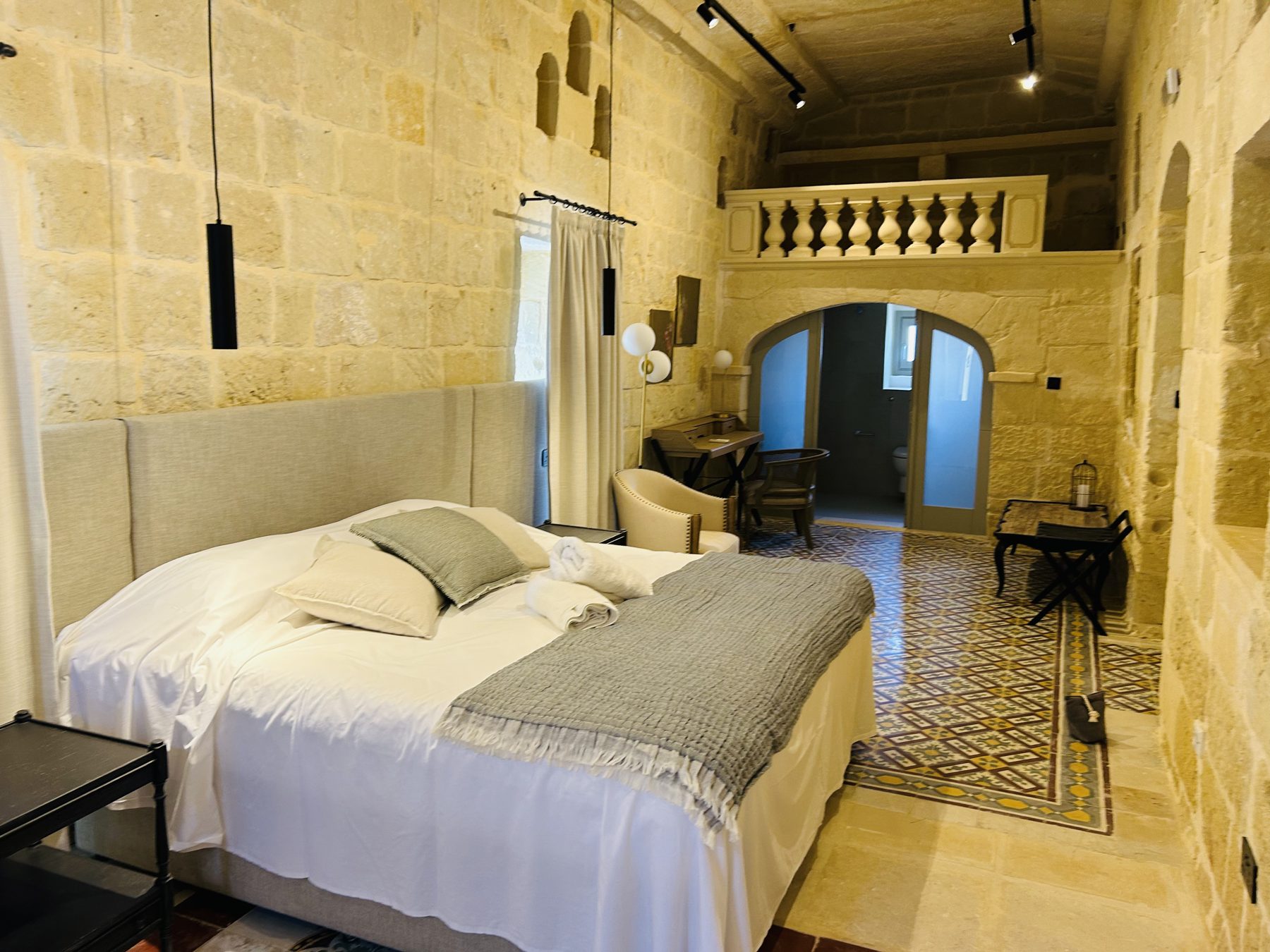
The house takes four guests at a time. It carries no signage and it is a private house in San Lawrenz, above Dwejra, in the west of Malta, not a building with a reception desk. The ketamine assisted sessions are individual, and so is the time with the therapist; between sessions there are integration sessions with the other guests, and no group ceremonies.
For people who arrive from senior roles this is often the first question they ask, and it is a fair question to ask any programme: who will know you are here, and who else will be in the room. The house and the island are described here, including how the week is laid out around the sessions.
Cost, what is included, and where people travel from
The programme is quoted as one sum for the whole course rather than a rate per night, and it covers treatment, the three weeks of preparation, the residential week with its accommodation, meals and activities, and the three weeks of integration, with the same team throughout. Flights are not included. The figure is quoted in writing on the introductory call, before you are asked to pay anything.
People search for a burnout retreat in Europe, in the UK and in Scotland, and the results come back Arizona and Phuket, which is a long flight at the point when flying is the hardest thing on the list. Malta is a three hour flight from most of Western Europe, we meet you at the airport, and the house is about ninety minutes from arrivals, ferry included. You can refer yourself, with no doctor’s letter required.
Two doctors go through your health, your medication and what has or has not helped before you pay for the programme, and the week is built on what they find.
Both doctors on the programme, Dr Peter Muscat and Dr Christopher Gauci, are on the register of the Medical Council of Malta, which is public and worth checking for any programme you are considering, ours included. If you want to know what the assessment involves before you pay for it, ask us what it covers and what happens in each outcome.
Next stepSee what the assessment covers and what happens after it
Common questions
Is there a retreat for burnout?
Yes, and the phrase covers several different products that differ mainly in how much assessment happens before you book. Ours puts a medical assessment with two doctors before any booking, and that is what decides whether a week away is the right move for you at all. Start with a short call.
How long does it take to recover from a burnout?
Months rather than a week, in the severe cases. In an 18 month Swedish follow-up of 232 patients with stress related exhaustion, a third still had symptoms at the end, and recovery took longer for people who waited a year or more before they reached specialist care. Waiting is the expensive part, and the first step is a short call.
What kind of therapy is best for burnout?
It follows what the assessment finds, which is why the assessment comes before the plan rather than after it. Where the exhaustion is held up by the load, the work is on the person and on the load together. Where something else sits underneath it, the plan changes shape. The medical assessment with the psychiatrist settles which one you are in.
What are the 12 stages of burnout?
A model proposed by the psychologists Herbert Freudenberger and Gail North, running from the compulsion to prove oneself through neglect of personal needs and withdrawal to exhaustion. People recognise the trajectory, and it has not been validated as a diagnostic instrument, so where you actually are is something a clinician works out with you. That is what the medical assessment is for.
Find out whether the programme fits you
Tell us what you are dealing with and what you have already tried. Whether it suits you is decided by two doctors at the medical assessment, before you are asked to pay anything.
No payment and no booking at this step.
A burnout retreat is a residential stay sold for work exhaustion, and the same phrase covers three different products: a spa week, a treatment programme billed through a health plan, and a medical programme where a psychiatrist assesses you before you book. What separates them is that assessment, because exhaustion that turns out to be a depressive episode needs a different route from exhaustion caused by the job. Recovery from stress related exhaustion is measured in months: in an 18 month Swedish follow-up of 232 patients, a third still had symptoms at the end. A week away works as the start of that, with the weeks after it planned in advance.