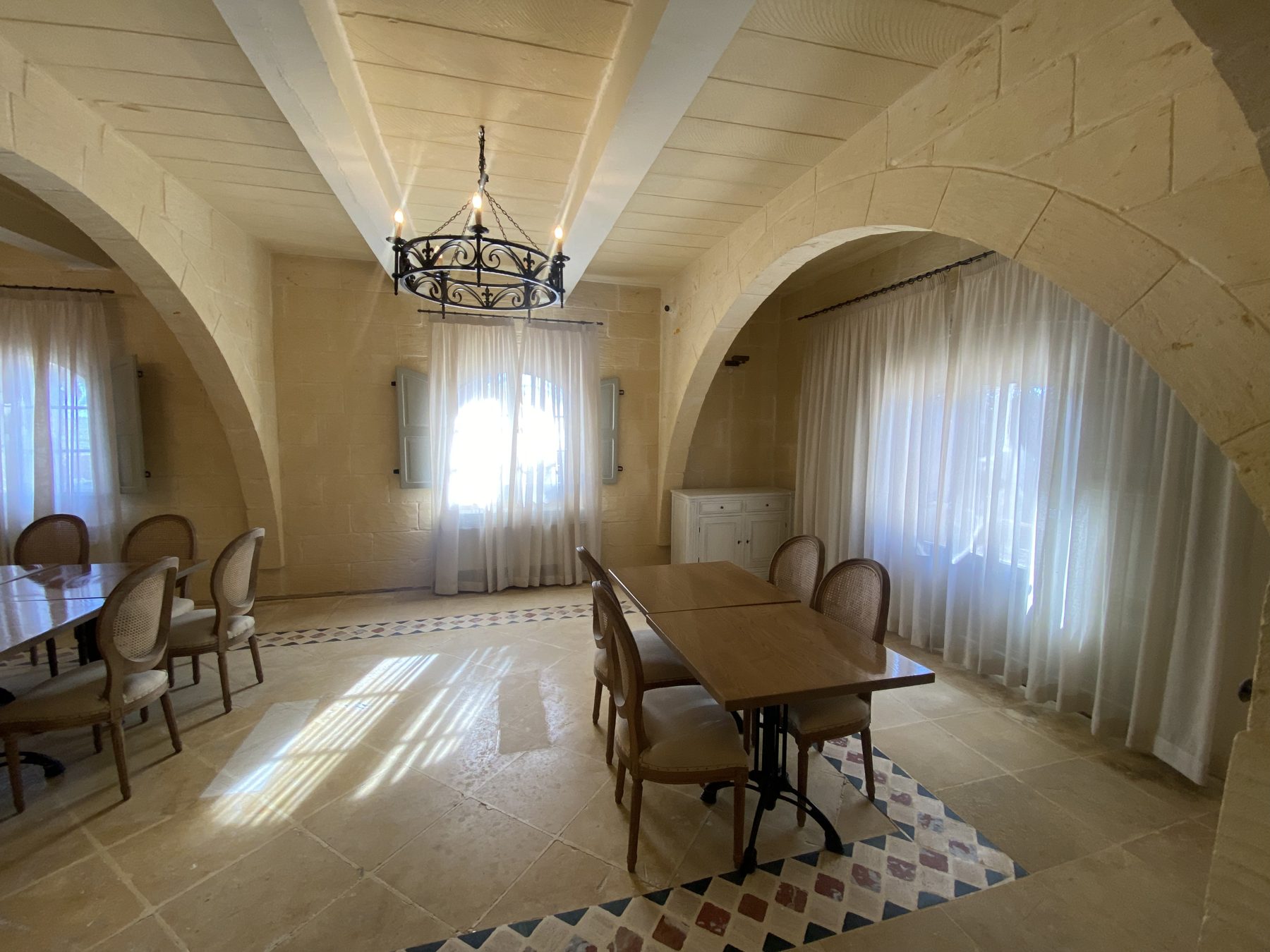
Under the words anxiety retreat sit two different things: a wellness week of yoga and breathwork, and a medical programme with a psychiatrist behind it. If you are searching for one, you have probably reached the point where nothing has helped and you are running out of options, and a week away sounds like the first idea in a long time that is not another appointment.
Panic attacks belong in that search too. An attack is frightening enough to make anyone look for somewhere with staff in it, and the outpatient route is the first line: NICE guideline CG113 puts psychological therapy with exposure work at the front of treatment for panic disorder (NICE, 2011). If attacks have been coming for months, the step that helps is finishing a proper outpatient course. A residential week is worth discussing when panic sits on top of longer-standing anxiety or depression that has not responded to what has already been tried.
What the words anxiety retreat cover
Three quite different products are sold under the same phrase, and the difference between them is not visible in the pictures.
A wellness week offers yoga, breathwork, cold water, walks and sometimes a coach. Most wellness weeks have a schedule and no prescriber. It can be restorative, and it is bought and priced as travel; a group retreat over a weekend is the short version of the same product.
A residential centre in the United States is an addiction and mental health facility with beds, billed per day through an insurance plan. Intake is clinical, the stay is measured in weeks, and anxiety is usually treated as one diagnosis among several on the unit.
A medical programme sits between the two: a small residential setting with a psychiatrist who assesses you before you arrive, a treatment given under supervision, and psychotherapy built around it.
A psychiatric inpatient ward turns up in the same searches, though it answers a different question: it manages risk under observation rather than treating on a booking. The quickest test for the rest is to ask who signs off on your case and what happens in week four. A schedule of activities answers neither question.
Which of the three you are looking at
For anxiety the difference narrows to one thing: whether a clinician carries the outcome with you, or whether you do, once you are home with a folder of techniques. That is a question you can settle before paying anything, because the medical assessment is where it gets answered.
When anxiety stops being a question of technique
Techniques work. Breathing, grounding, exposure, sleep discipline: these are the working parts of cognitive behavioural therapy, which improved anxiety symptoms against placebo across 41 randomised trials in the 2018 meta-analysis by Carpenter and colleagues in Depression and Anxiety, and they are worth learning properly. A retreat teaches them in a week, in a place with fewer demands on your attention than home has.
The difficulty is the loop. Avoidance lowers the fear today and raises it tomorrow, which is why NICE guideline CG113 puts exposure work rather than relaxation at the front of treatment (NICE, 2011). The technique you can perform on a terrace in good weather is the one that goes missing at 3am in your own bed, because the situation generating the fear is at home, along with the job, the marriage and the inbox.
That is why a week on its own tends not to hold once you are back. Nothing was fake about the week. It worked on the symptom in the one place where the symptom was quiet, and left untouched what switches it back on at home. That is the argument for choosing a programme by what happens after you fly home, and not by what happens during the week.
Anxiety and depression together, and what that changes
Anxiety rarely arrives alone. What that changes for treatment is set out in the reviewed section below, and it changes what a week is built around rather than whether the week is for you. Which of the two is setting the shape of your week is exactly what our psychiatrist and our medical lead work out at the medical assessment, along with the practical questions that come up before a first session.
What to try before a retreat, how long to give each step, and when a step is finished
Most people who reach this page have already tried the usual route: therapy, medication, or both. What they rarely get told is when a step counts as finished. An adequate dose, long enough to judge, with the exposure work actually done rather than discussed. Two or three partial attempts feel like five years of failure and are not the same thing.
Which of those you are in is a short question for someone who can read your history, and it is worth asking before anything else. The medical assessment answers it either way: what is still worth finishing, and whether a residential programme is the right next move for the anxiety that is left. Put your history forward without a letter from a doctor.
What the numbers say
- Cognitive behavioural therapy shows a moderate effect on anxiety symptoms against placebo across 41 randomised trials (Carpenter et al., 2018)
- CG113 sets review points for anxiety medication at 2, 4, 6 and 12 weeks after starting (NICE, 2011)
- Ketamine trials in anxiety alone have enrolled roughly 12 to 20 participants each; the trials in depression enrolled hundreds
- The effect of a single ketamine session in depression appears within hours and is largely gone within one to two weeks unless there are more sessions (Zarate et al., 2006)
Ketamine for anxiety: what is known and what is not
Ketamine reached psychiatry through depression. The anchoring trial gave a single intravenous dose to people whose depression had resisted other treatment and measured an effect within two hours that was still there at 24 hours (Zarate and colleagues, 2006, Archives of General Psychiatry). The trials that followed in depression enrolled hundreds of participants, which is what makes that part of the file solid.
Anxiety has a smaller file. A crossover trial in 18 adults with social anxiety disorder compared ketamine against midazolam, a comparator that produces sedation and so makes it harder to guess which group you are in, and found greater reduction in anxiety on ketamine (Taylor and colleagues, 2018, Neuropsychopharmacology). An open-label study, where everyone knew what was being given, followed 12 people with refractory anxiety and reported improvement lasting up to a week at the higher doses, with no repeat measurement afterwards (Glue and colleagues, 2017, Journal of Psychopharmacology).
Real findings on a small scale. That is why it is not sold here as a certainty and why the decision is made for one person at a time, by a doctor who has read that person’s history.
Evidence is thinner and comes mostly from small trials and open-label studies, several in generalised and social anxiety disorder. Anxiety symptoms often improve alongside depression when both are present. Where anxiety stands on its own, the evidence is younger than it is for depression, so whether it fits is a clinical judgement made with a KAP therapist rather than something settled in advance.
Checked for medical accuracy by Dr Christopher Gauci, MD MRCS(Ed) EDAIC on 1 October 2026. The check covers this section. Everything else on the page is written by our editorial team and verified against primary sources.
In practice that means the question is answerable, just not from a web page. Our psychiatrist and our medical lead read what you have already tried and tell you whether this route fits your anxiety: a straight answer, with no date held until you have it. Put your history forward and find out.
The effect is shorter than in depression, and what holds it afterwards
The effect of a single session appears within hours and fades over one to two weeks unless there are more of them (Zarate and colleagues, 2006). That is why the week is built as one part of a course rather than as the treatment itself.
That is why the sessions are not sold on their own here. Three weeks of online integration follow them, with the same psychotherapist you worked with on the island, working on the avoidance and the habits anxiety runs on. The follow-up is the part worth asking any programme about.
What it costs and what is included
Ours is one sum for the whole course rather than a nightly rate, and it covers three weeks of online preparation, the residential week in Malta with the treatment and the medical supervision, the accommodation, the food and the activities, and three weeks of integration afterwards. The flight is the one thing it does not include.
You are told the figure on a short introductory call, in writing, before you are asked to pay anything. Whether the programme is the right answer for your anxiety at all is settled next, at a medical assessment with our psychiatrist and our medical lead, which is the more useful half of the process. Start with the call, no doctor’s letter needed.
We meet you at Malta International and take you to the house by taxi and ferry, around ninety minutes door to door. Applications come without a referral letter: your history is read by the two doctors at the assessment, before anything is booked.
How our medical week works
Hive Bio is a retreat centre in Malta with a ketamine-assisted psychotherapy service, run by HIVE BIO Malta LTD (C 94710), with clinicians registered with the Medical Council of Malta. Four guests at a time, individual sessions, group integration with the other guests, no ceremonies.
Where anxiety comes with depression, the treatment works on the part with the strongest evidence behind it, and the anxiety often moves with it. Where anxiety stands alone, what does the work is the combination: an assessment that says whether this is the right route at all, sessions under medical supervision, psychotherapy built around them, and three weeks of integration aimed at the avoidance that keeps anxiety in place. The drug by itself is the weakest version of that offer, and we would rather say so than sell it.
All of it sits with one team and in one price. The same anaesthetist, psychiatrist and psychotherapist stay with you from preparation to the last integration session, and a doctor and a nurse are with you for the whole of every session. On an outpatient route the sessions, the therapy and the integration are usually bought separately, from different people, and after a dose you travel back to the same job and the same inbox the anxiety runs on. Here you have your own room, the rest of a session day is kept for rest, and you go home with your integration plan in writing.
Whether this is the right route for you is settled at the medical assessment, by our psychiatrist and our medical lead reading your history, before you pay anything. That conversation is worth having even if the answer turns out to be later rather than now.
To see the mechanics before speaking to anyone, the programme is set out in full, and the route in starts with a short call.
Not sure whether this is the right route for you?
The assessment exists to answer that.
The medical assessment is carried out by our psychiatrist and our medical lead before anything is booked.
Common questions
Do anxiety retreats work?
It depends which kind. A wellness week gives rest and teaches techniques, and the effect tends to last about as long as the conditions that produced it. A medical programme with assessment, supervised treatment and follow-up is built around the weeks after you get home, not around the week itself. If you want to know which of the two your situation calls for, our doctors will read your history and tell you.
Can you go to a retreat for panic attacks?
You can. For panic disorder on its own NICE guideline CG113 puts psychological therapy with exposure work first (NICE, 2011), and a residential programme becomes the stronger option when panic sits on top of longer-standing anxiety that has not moved with what you have already tried. Which of those describes you is a question for the medical assessment, and you can start that without a doctor’s letter.
How much does an anxiety retreat cost?
Ours is quoted as one sum for the whole course, covering preparation, the residential week, accommodation, food, activities and three weeks of integration, with the flight booked separately. You are told it on the introductory call, in writing, before you are asked to pay anything. See what each phase contains and book the call.
What if anxiety and depression come together?
Then both belong in one plan rather than two, and the week is built around that from the start. Which of the two is doing the most work in your case is what our doctors establish at the medical assessment, so that is the place to bring it.
An anxiety retreat can mean three different things: a wellness week of yoga and breathwork, a residential centre billed through insurance, or a medical programme run by a psychiatrist. A week of techniques usually holds for about as long as the holiday. What changes the pattern is treatment aimed at the cause, and, where depression sits alongside the anxiety, at both at once, for the reason the clinical section above sets out. Ketamine is the medical option people arrive asking about, and what is known about it in anxiety on its own is set out in the reviewed section of this page. Choose by who runs the programme clinically.